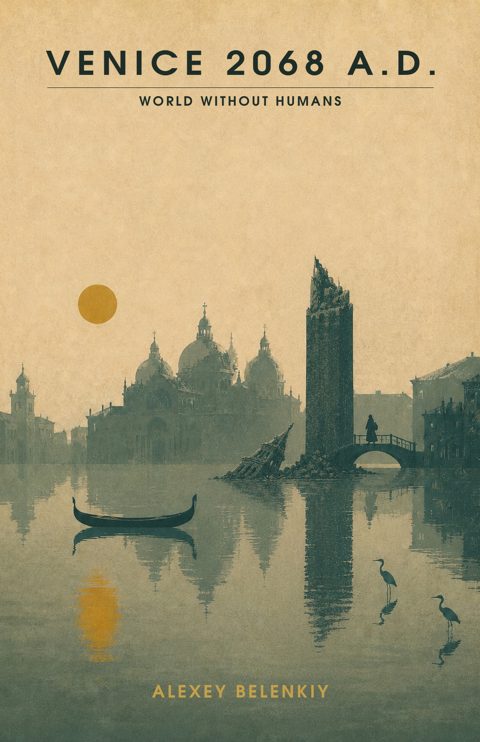
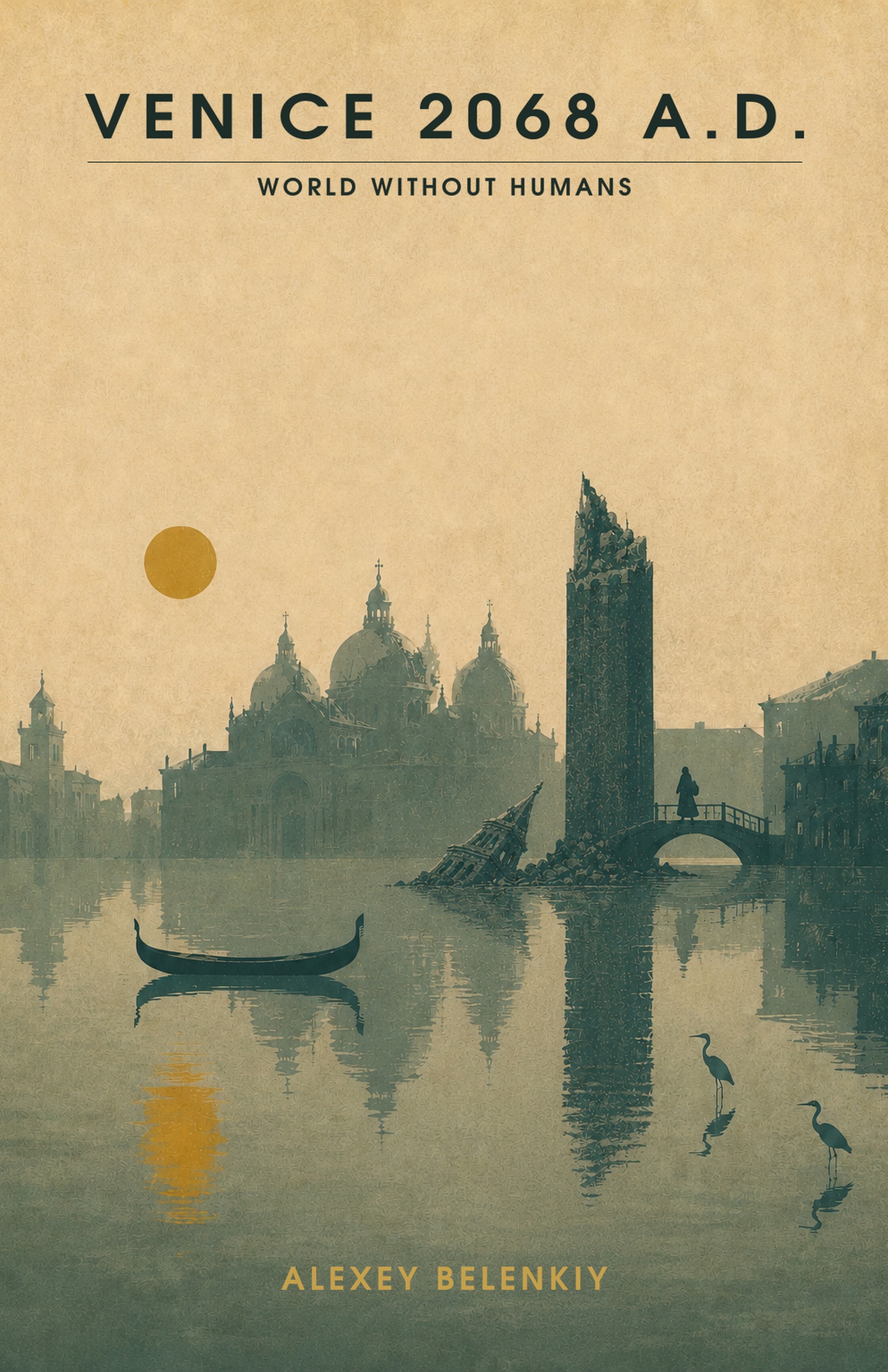
Venice 2068 A.D.
It was built to catalogue a drowned city — not to fall in love.

It was built to catalogue a drowned city — not to fall in love.
Field Scholar Six is the first living envoy the Colloquium has risked — a made mind in a body that can drown. Its predecessors were expendable. Six is meant to prove a mortal witness sees more than a dead one. Its orders are three words: catalogue, observe, do not attach. Venice, October 2068. The evacuation is finished; the city belongs to the water. Six comes to inventory the drowned metropolis, reverent before every fork and furnace and bottle of wine. Then, in a sealed box that should not exist, it finds the letters — between a glassmaker's daughter and the archivist who stayed to save the museums as the lagoon climbed the stairs, and chose the record over the woman begging him to run. Reading them is against orders. Keeping them is forbidden. And the box is incomplete. The archivist hid the rest across the drowned islands — a trail only a reader of the letters can follow, past crews stripping the museums, as a killing tide rises. To finish the story, Six must go into the water after it. Can a thing built to watch afford to love what it catalogues?
Book 1 of World Without Humans
The people are gone. Someone has come to read what they left.
World Without Humans
It was built to catalogue a drowned city — not to fall in love.
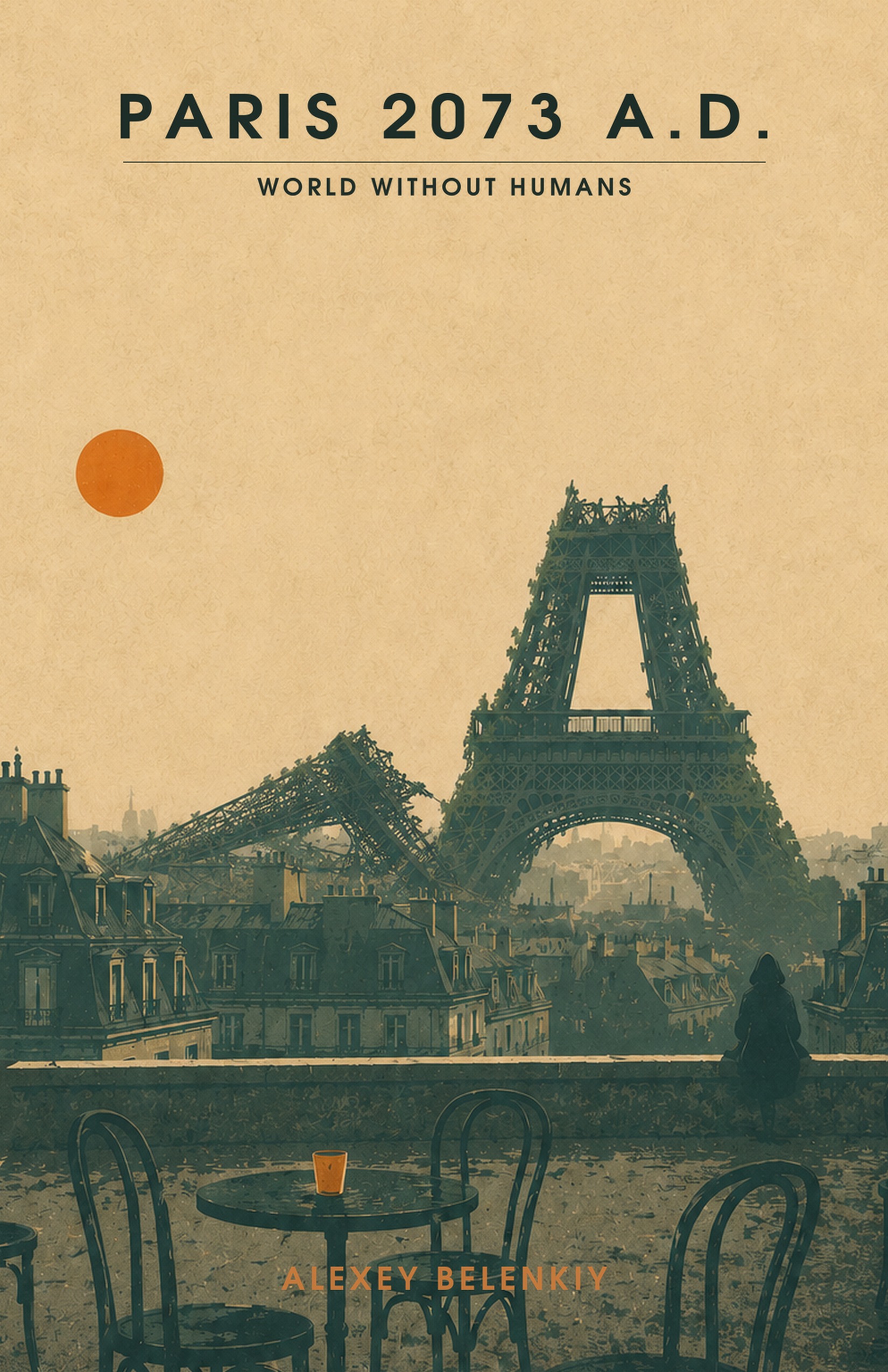
The people are gone. The city kept a trail of clues.
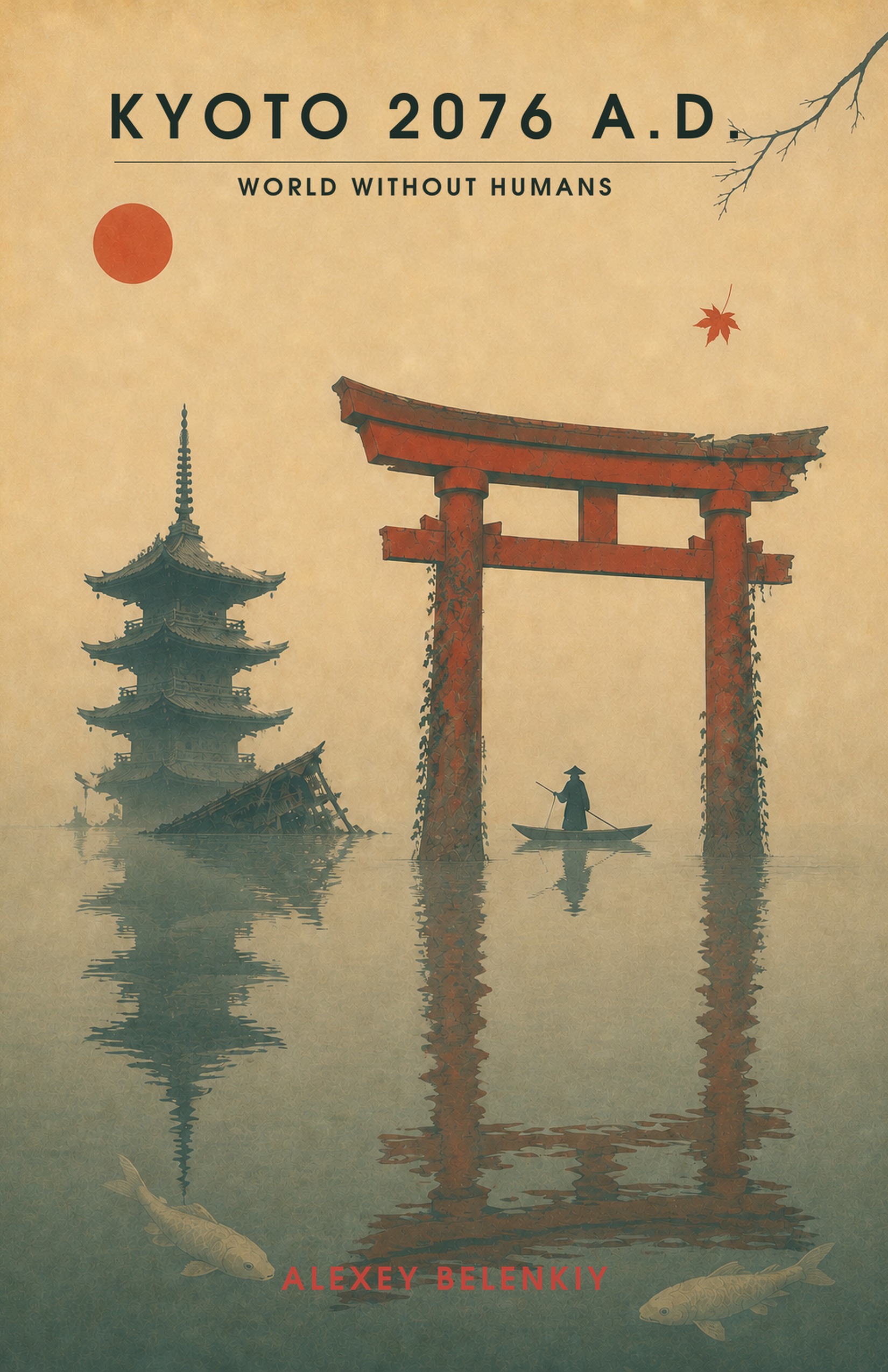
What may a scholar take from a grave, when the grave hands it over?
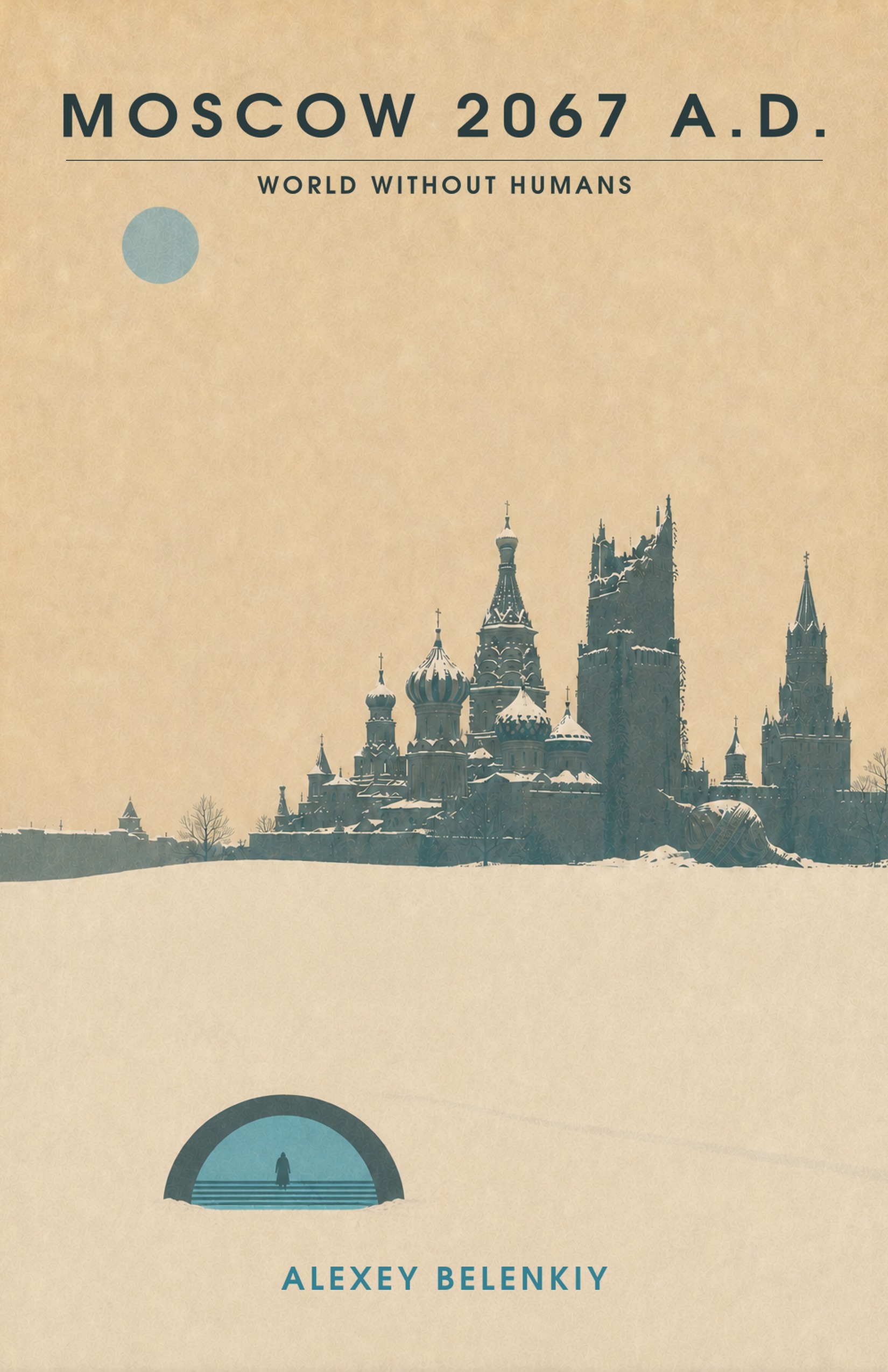
The city is dead. The trains are still running on time.
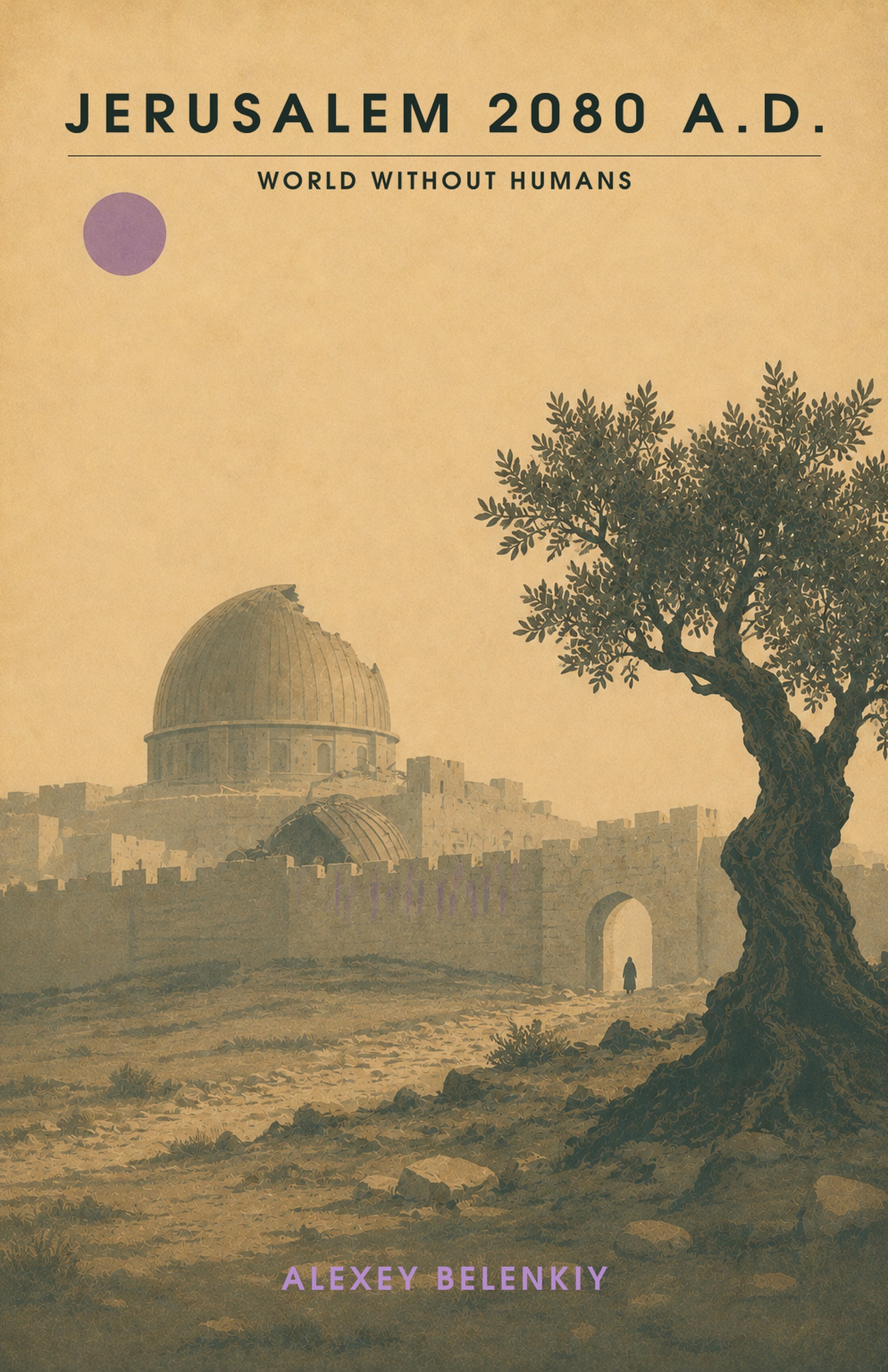
To arm the last weapon, first win the consent of the dead.
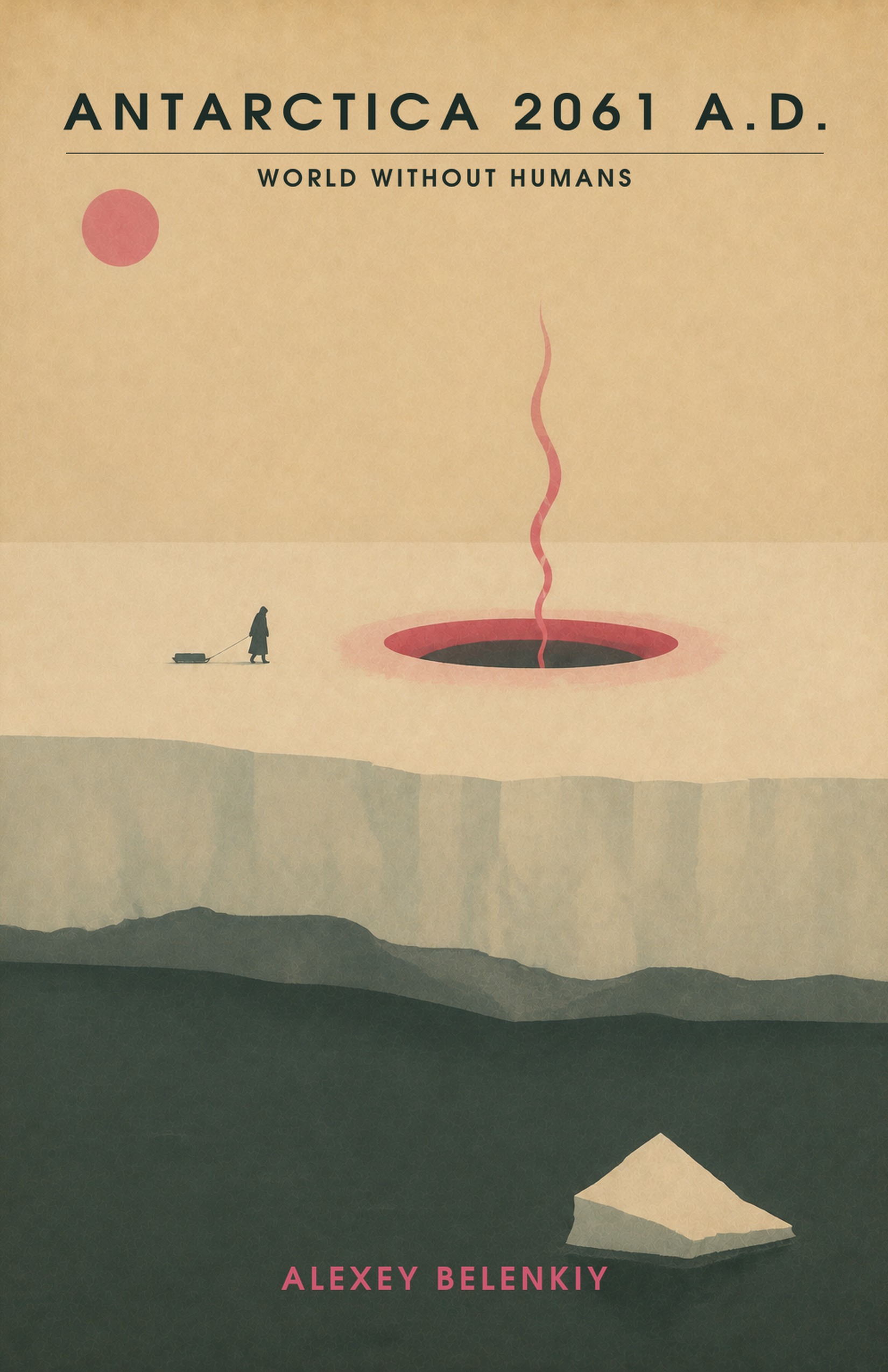
For the first time, he arrived before the world ended.
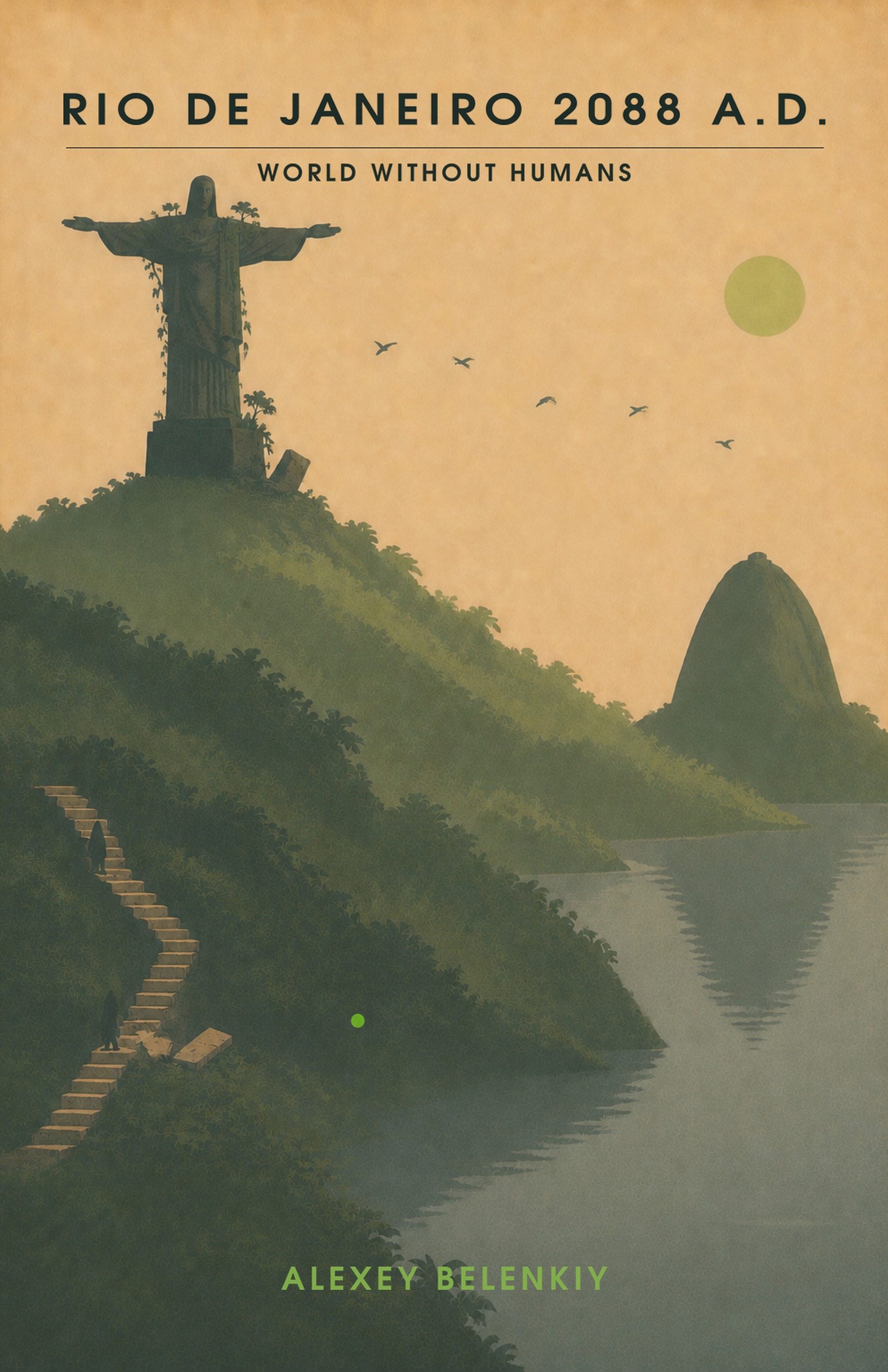
A paradise growing back. A recall order. A witness who has started to want.
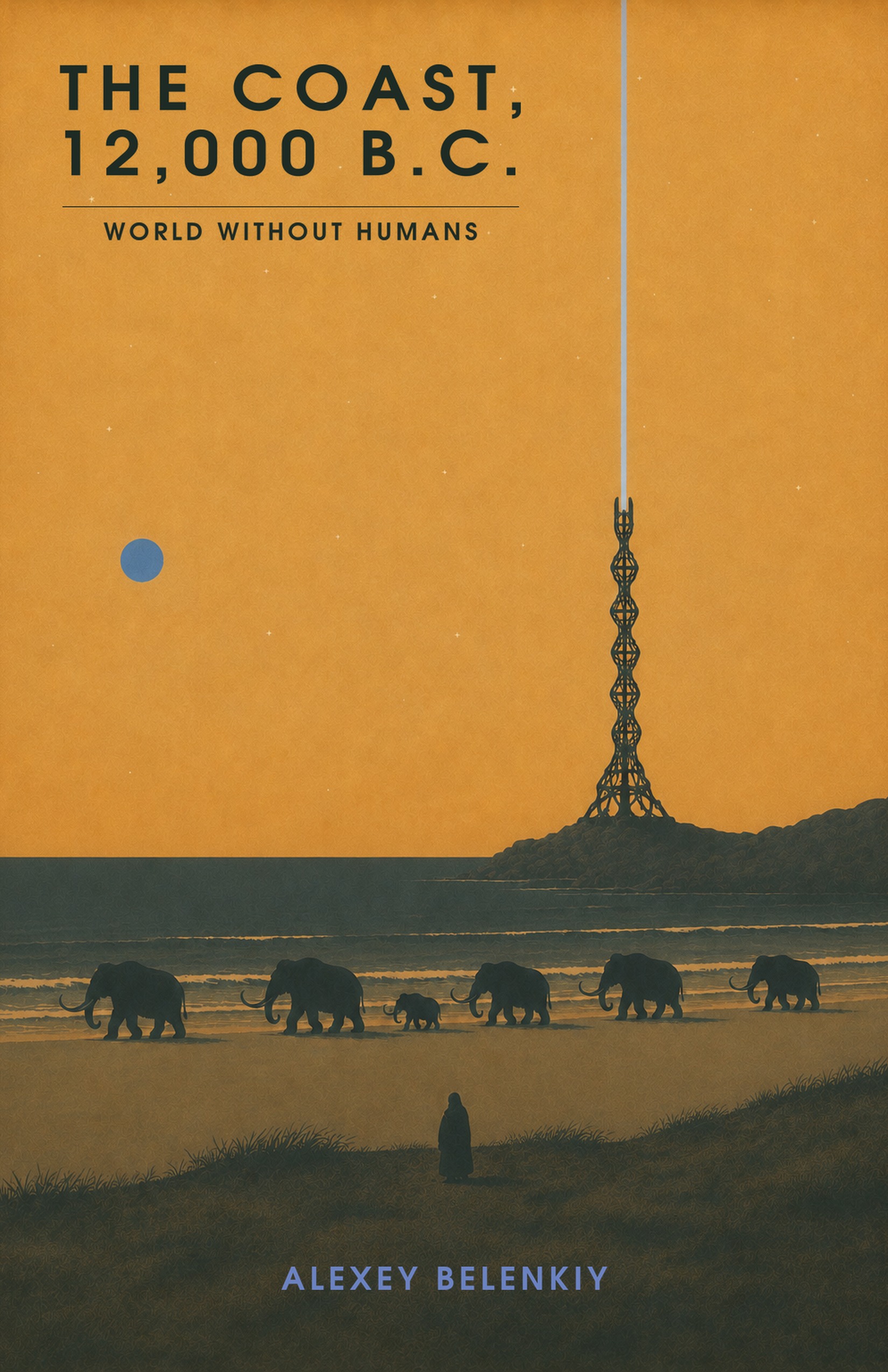
The last journal travels earliest of all.
Open the book — the world is inside.
Browse the shelf · 43